Abstract:
Northeast India is a globally significant freshwater biodiversity region, while Assam supports diverse riverine, wetland and pond-based fisheries alongside expanding intensive and semi-intensive aquaculture. Fish diseases increasingly threaten productivity, farm profitability and the sustainability of aquatic food systems. The present study provides a decadal assessment (2016–2026), based on primary field observations and longitudinal records, to characterize disease occurrence, temporal and seasonal patterns, environmental associations and farmer-led health-management practices in cultured fishes of Assam, with detailed observations from Biswanath District. Parasitic, bacterial and fungal infections, together with non-infectious disorders, were documented. The principal conditions included argulosis, Lernaea infestation, epizootic ulcerative syndrome (EUS), fin and tail rot, saprolegniasis, columnaris disease and dropsy. Argulosis was the most frequently reported condition, followed by Lernaea infestation and EUS. Disease occurrence exhibited marked temporal and seasonal variation, particularly following stocking and during rainy, post-monsoon and winter periods. Cypriniformes accounted for the largest proportion of affected fishes (49.09%), followed by Perciformes (27.00%), Siluriformes (13.00%) and Anabantiformes (10.91%). Disease occurrence was associated with variation in temperature, dissolved oxygen, pH, ammonia, nitrite and hydrogen sulphide, as well as stocking density, hydrological disturbances and other environmental stressors. Removal of affected fish was the most common management response, followed by chemical treatment, indicating a predominantly reactive approach to disease control. These findings emphasize the need to shift towards preventive and integrated aquatic-health management through biosecurity, scientific pre-stocking preparation, pond sanitation, water-quality optimization, early disease recognition and timely diagnosis. The decadal assessment demonstrates substantial temporal and seasonal heterogeneity in the disease profile and highlights the importance of parasitic infections alongside established conditions such as EUS. The study provides a primary-data baseline for strengthening disease surveillance, risk-based prevention, farmer capacity building and environmentally responsible health-management practices to enhance the resilience, productivity and sustainability of aquaculture in Assam and the wider Northeast Indian region.
Keywords: Fish diseases; aquatic health; Argulosis; EUS; aquaculture; Assam
Biography:
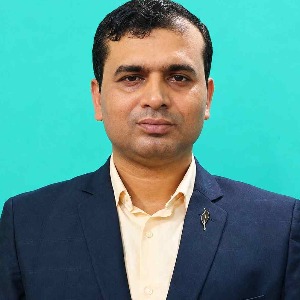
Dr. Chittaranjan Baruah, M.Sc., Ph.D.
Dr. Chittaranjan Baruah holds an M.Sc. and Ph.D. in Zoology, along with an Advanced Postgraduate Diploma in Bioinformatics. He is a member of the International Union for Conservation of Nature (IUCN) and the Founder & Editor of the Asian Journal of Conservation Biology (ISSN: 2278-7666), a Scopus-indexed international journal from Northeast India.
He was a recipient of the Conservation Leadership Program (CLP) Award (2010), jointly awarded by BirdLife International, Fauna & Flora International (FFI), and the Wildlife Conservation Society (WCS). He also received the Academic Excellence Award from the Institute of Scholars (INSc), Bengaluru, in 2024.
Dr. Baruah was an Asian Scholar of ASPin-situCC, based at the Wetlands Institute, New Jersey, USA, for six months in 2010. He also completed a one-month Conservation Leadership Training program at the University of Calgary, Canada, in 2010.
He is currently serving as Associate Professor in the Postgraduate Department of Zoology, Darrang College (Autonomous), Assam, India. He also serves as Member Secretary of Darrang College (Autonomous), Convener of the Institutional Innovation Council (IIC), and Convener of the R&D Cell of the college. He has more than 13 years of undergraduate and postgraduate teaching experience. Prior to his present position, he served as a Research Associate in Bioinformatics at the DBT-BIF Centre, Gauhati University, for three years.
Dr. Baruah has published more than 60 research papers in international peer-reviewed journals, along with 7 books, 3 edited books, and 20 book chapters. He has presented more than 50 papers at seminars and conferences and has delivered over 30 invited talks and lectures in Bioinformatics at various higher-learning institutions in India and abroad, including Pakuan University, Indonesia; Gauhati University; Assam Agricultural University; Bodoland University; CSIR-NEIST; Cotton University; USTM, Meghalaya; St. Anthony’s College, Shillong; Mangaldai College; Kaliabor College; Dhing College; and Biswanath College.
He has completed six research projects as Principal Investigator, supported by international funding agencies from the UK, USA, and UAE, as well as a national project funded by the Department of Biotechnology (DBT), Government of India.
Dr. Baruah is a recognized Ph.D. Research Guide at Gauhati University and the University of Science and Technology Meghalaya (USTM). One scholar has been awarded a Ph.D. under his guidance, while four scholars are currently pursuing Ph.D. research under his supervision. He also serves as a Ph.D. Research Advisory Committee (RAC) member at Bodoland University.
He is a Life Member of 10 national and international professional bodies, serves on the Editorial Board of the Indonesian Journal of Applied Environmental Studies (InJAST), and is a reviewer for 11 leading international journals in Bioinformatics and Molecular Biology published by Springer Nature, Elsevier, and Taylor & Francis.
Since 2014, Dr. Baruah has been serving as the Secretary of the Assam Science Society, Tezpur Branch. He has also recently received two design patents, while two utility patents have been published.