HYBRID EVENT: Join us in person in Tokyo, Japan or attend virtually from anywhere.

6th Edition of
World Congress on Aquaculture, Fisheries & Marine Biology

October 8-10, 2026 | Tokyo, Japan
WAC 2026

Fisheries development as tools to save the wetlands in India and enhancement of local livelihood – Indian experiences

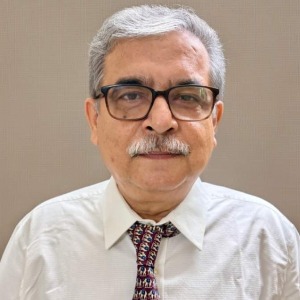
Nitai Chandra Kundu, Speaker at Aquaculture Conferences
Centre for Environmental Management and Participatory Development, India
Title : Fisheries development as tools to save the wetlands in India and enhancement of local livelihood – Indian experiences

Abstract:

Watter area now popularized as wetlands in general is vulnerable since the beginning of the civilization. Economic activities of human population led to the encroachment of wetlands throughout the world because of it its low economic return than that of other non-wetland use. This incidence is severe in flood plain wetlands, urban and peri-urban wetlands.

Low economic return form the existing traditional use like Fishery, Tourism, nutrient recycling and other use in the urban and peri-urban areas and Wetlands in the Flood plain areas could not apparently compete with the agriculture as a sequel of the ongoing economic development led to rapid change of land use in Flood plain and Urban intrastromal development in urban and peri-urban area. In spite of several measures taken up at national and international level to stop and harmonize the situation, threat of conversion is common in these two types of wetlands.

Available literature on expansion of upland croplands was the most vital cause of natural wetland loss followed by flooded rice (18.2%), urban areas (8.0%), forestry (4.7%), wetland cultivation (4.3%), pasture (2.0%) and peat extraction (0.9%;).

This Key note address is thus to focus on use of Floodplain and peri-urban and urban wetlands for productive use with the potential of pisci-culture and allied activities and that pisci-culture and allied activities can be a potential alternative trade off, which can save this valuable resource and thereby potential eco-system.

As a corollary of this trend of wetland shrinkage worldwide is much more acute in Urban wetlands located either inside or vicinity or fringe of the urban area popularly known as peri-urban area-which is actually prospective urban area in Kolkata and other Municipal Towns in India and west Bengal compared to the flood plain wetlands. However, only economically potential practices that can make the management of these vulnerable water areas much more competitive to the market force driven conversion to non-wetland use in the perspective of livelihood enhancement.

Biography:

Dr Nitai C Kundu (Born in 1959) is an expert in Applied Social and Environmental sciences with committed and dedicated  in research and teaching form  1986 to till now. Carrying out Research and training, Policy formulation and Evaluation, part time teaching in several University. He started his career after his Master degree from Calcutta University as Research Fellow during 1982-1986 Under State Planning Board and Registered for PhD in Calcutta University and then he joined as Research Associate during 1986-1993,in  Institute of Wetland Management and Ecological Design, an autonomous Research Institute under Govt in Calcutta. Later he joined as Scientist, 1993-2003, in Institute of Wetland Management and Ecological Design, Calcutta. and Sr. Scientist, 2003- 20013, Institute of Environmental Studies and Wetland Management (formerly Institute of Wetland Management and Ecological Design), Calcutta. He also joined parallelly as Chief Technical Officer in 2006-2011 in East Kolkata Wetlands Management Authority, Department of Environment, Govt of West Bengal Kolkata.

He also worked as Sr. Scientist, from February, in 2013- September, 2016 West Bengal Pollution Control Board on a particular assignment. He left Institute of Environmental Studies and Wetland Management as Sr. Scientist, in January, 2019, (formerly Institute of Wetland Management and Ecological Design), Calcutta and  joined Centre for Environmental Management and Participatory Development (CEMPD) in 2019 and continuing as Chief Advisor till date. As regards his academic qualification he did Pre-University and Graduation from University of Calcutta   and also Master Degree from University of Calcutta in Social Science in 1981. He did Ph.D. from   University of Calcutta in 1994 and Environment Management Degree from University of Birmingham in 1993.

He completed 24 Research projects 29 Research papers of national and internation standard, 8 Books and one edited international Journal on Science and Technology and Development. He supervised PhD and M Phil students.

Whatsapp